
 1840. 最高建筑高度Java
文章发布较早,内容可能过时,阅读注意甄别。
# 题目
在一座城市里,你需要建 n 栋新的建筑。这些新的建筑会从 1 到 n 编号排成一列。
这座城市对这些新建筑有一些规定:
- 每栋建筑的高度必须是一个非负整数。
- 第一栋建筑的高度 必须 是 0 。
- 任意两栋相邻建筑的高度差 不能超过 1 。 除此以外,某些建筑还有额外的最高高度限制。这些限制会以二维整数数组 restrictions 的形式给出,其中 restrictions[i] = [idi, maxHeighti] ,表示建筑 idi 的高度 不能超过 maxHeighti 。
题目保证每栋建筑在 restrictions 中 至多出现一次 ,同时建筑 1 不会 出现在 restrictions 中。
请你返回 最高 建筑能达到的 最高高度 。
示例 1:

输入:n = 5, restrictions = [[2,1],[4,1]]
输出:2
解释:上图中的绿色区域为每栋建筑被允许的最高高度。
我们可以使建筑高度分别为 [0,1,2,1,2] ,最高建筑的高度为 2 。
示例 2:
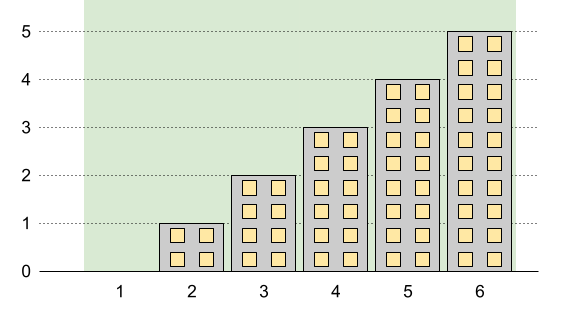
输入:n = 6, restrictions = []
输出:5
解释:上图中的绿色区域为每栋建筑被允许的最高高度。
我们可以使建筑高度分别为 [0,1,2,3,4,5] ,最高建筑的高度为 5 。
示例 3:
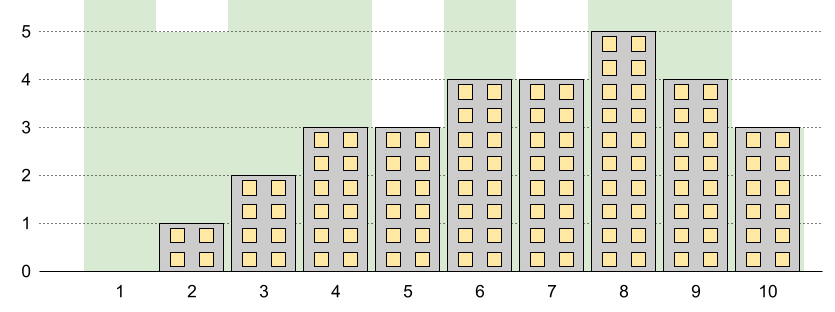
输入:n = 10, restrictions = [[5,3],[2,5],[7,4],[10,3]]
输出:5
解释:上图中的绿色区域为每栋建筑被允许的最高高度。
我们可以使建筑高度分别为 [0,1,2,3,3,4,4,5,4,3] ,最高建筑的高度为 5 。
提示:
- 2 <= n <= 109
- 0 <= restrictions.length <= min(n - 1, 105)
- 2 <= idi <= n
- idi 是 唯一的 。
- 0 <= maxHeighti <= 109
# 思路
Arrays.sort
# 解法
class Solution {
    public static int maxBuilding(int n, int[][] restrictions) {
        Arrays.sort(restrictions, (o1, o2) -> o1[0] + o1[1] - o2[0] - o2[1]);
        int result = 0, b = -1;
        for (int[] restriction : restrictions) {
            if (restriction[1] - restriction[0] < b) {
                result = Math.max(result, (restriction[0] + restriction[1] + b) >>> 1);
                b = restriction[1] - restriction[0];
            }
        }
        return Math.max(result, n + b);
    }
}
1
2
3
4
5
6
7
8
9
10
11
12
13
14
2
3
4
5
6
7
8
9
10
11
12
13
14
# 总结
- 分析出几种情况,然后分别对各个情况实现